
9 Stunning Home Decor Ideas to Make Any Room Feel More Stylish and Inviting
A stylish and inviting room is not necessarily the largest, most expensive, or most perfectly decorated space. The rooms that feel best usually have a thoughtful balance of comfort, personality, texture, color, and practical function. They welcome you to sit down, stay awhile, and enjoy the way the space works for everyday life.
Whether you are refreshing a living room, bedroom, dining area, entryway, home office, or open-plan space, a few intentional decorating decisions can create a dramatic transformation. The key is to layer details rather than relying on a single statement piece. A beautiful room combines a pleasing color story with comfortable furnishings, warm lighting, meaningful accessories, and enough breathing room to keep the space from feeling cluttered.
Use the following nine ideas as a flexible decorating guide. You can apply all of them for a complete room makeover or choose only the ideas that suit your existing furniture, budget, and personal style.
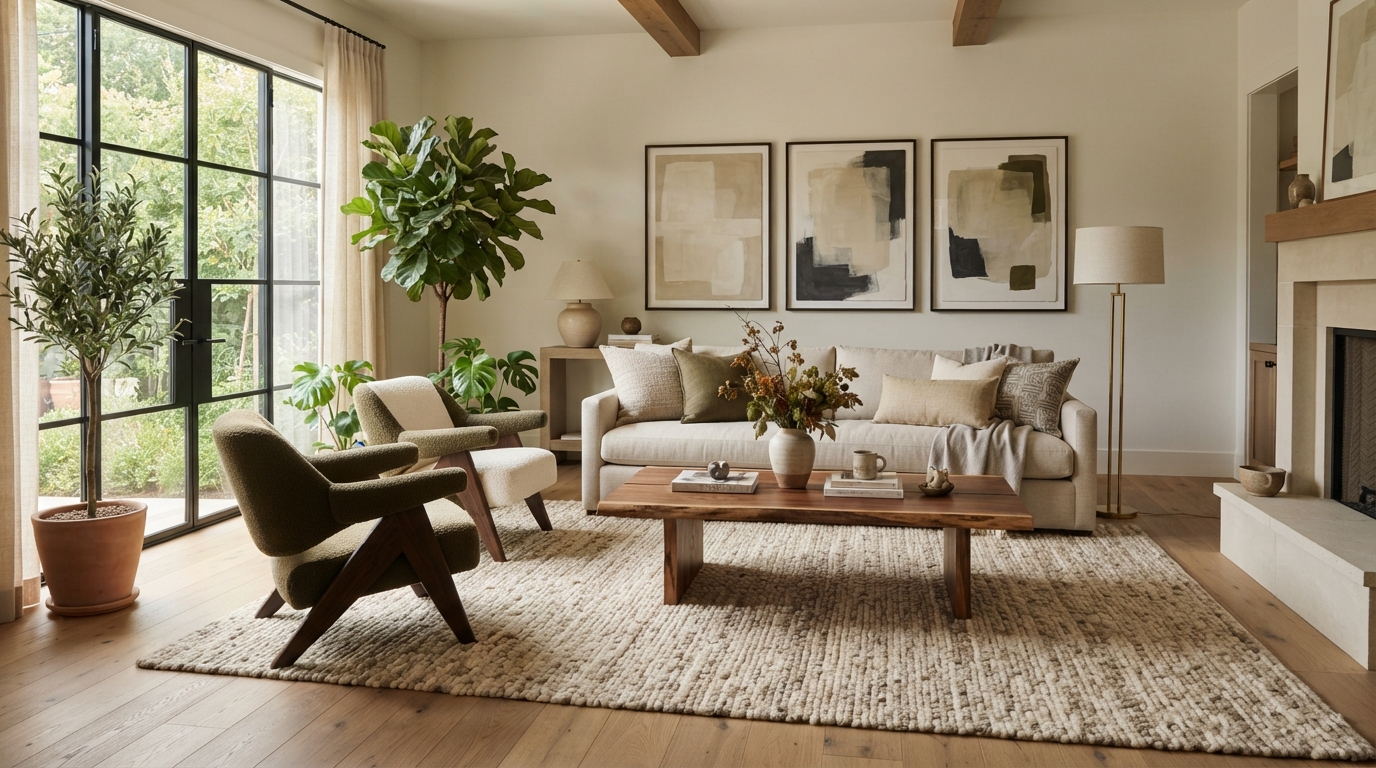
1. Create a Thoughtful and Cohesive Color Palette
Color is one of the fastest ways to change the atmosphere of a room. It influences whether a space feels calm, energetic, sophisticated, cozy, or playful. A stylish room does not need to be filled with many colors. In fact, the most inviting spaces often rely on a controlled palette made up of a few complementary shades.
Start with three layers of color
A simple decorating formula is to choose a dominant color, a secondary color, and one or two accent shades. The dominant color usually appears on the walls, large rugs, sofas, curtains, or other substantial surfaces. The secondary color can be introduced through upholstery, occasional chairs, bedding, or cabinetry. Accent colors belong in smaller details such as cushions, artwork, vases, books, and decorative objects.
- Soft and timeless: warm white, oatmeal, taupe, muted sage, and natural wood.
- Modern and dramatic: charcoal, creamy white, cognac leather, black, and brass.
- Relaxed and coastal: sandy beige, pale blue, soft gray, woven tan, and weathered wood.
- Warm and earthy: terracotta, olive green, clay, camel, walnut, and off-white.
- Elegant and romantic: dusty rose, mushroom, deep plum, antique brass, and ivory.
Before purchasing paint or accessories, observe how natural light moves through the room. A north-facing room may benefit from warm whites, creamy neutrals, or gentle peach undertones, while a bright south-facing room can often handle cooler grays, blue-greens, or deeper colors. Always test paint samples on more than one wall and look at them in the morning, afternoon, and evening.
Use color repetition to make a room feel intentional
One of the easiest ways to make a room look professionally styled is to repeat a color at least three times. For example, a muted green might appear in a piece of artwork, a throw pillow, and a small ceramic vase. Repetition helps different elements feel connected without making the room appear overly matched.
If you prefer neutral rooms, vary the undertones instead of adding many bright colors. Combine ivory, beige, mushroom, caramel, and warm gray with natural wood and aged metal. This creates depth while preserving a calm and sophisticated mood.
2. Build the Room Around a Strong Focal Point
Every room benefits from a visual anchor. A focal point gives the eye somewhere to land and helps determine how furniture should be arranged. Without one, a room can feel scattered, even when it contains beautiful pieces.
Common focal points include a fireplace, a large window, an architectural wall, a dramatic bed, a dining table, a statement light fixture, or a large piece of artwork. If the room has no obvious feature, you can create one with paint, wallpaper, a substantial mirror, or a carefully composed furniture arrangement.
Make artwork the star
A generously sized artwork is often more effective than a collection of small pieces scattered across the wall. Choose an image that includes at least two colors already present in the room. This creates a natural connection between the artwork and the surrounding furnishings.
For a living room, hang artwork approximately 6 to 10 inches above the back of the sofa, adjusting as needed for scale. In a dining room, a large horizontal piece can emphasize the length of the table. In a bedroom, consider placing artwork above the headboard or leaning a framed piece against the wall on a wide dresser.
Use an accent wall with restraint
An accent wall can add personality without overwhelming the room. Paint the wall behind the sofa, bed, or desk in a deeper version of the room’s main color. For a more distinctive look, use subtle wallpaper, vertical paneling, limewash, or a textured wall treatment.
When selecting an accent wall, choose one that naturally receives attention. Avoid creating an accent wall simply because it is empty. The wall should support the way people enter, move through, and use the room.
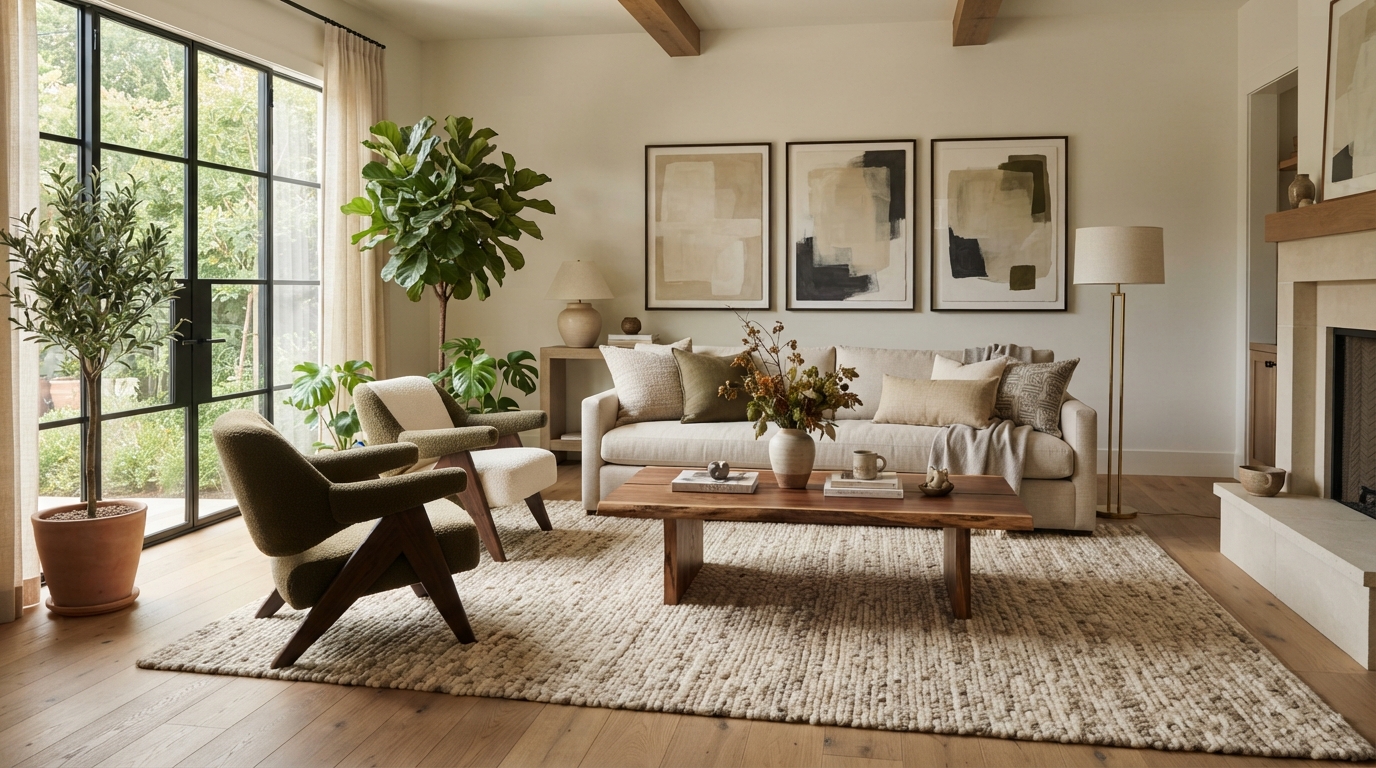
3. Layer Lighting for Warmth, Function, and Atmosphere
Lighting can make the difference between a room that feels flat and one that feels welcoming. A single ceiling fixture rarely provides enough variety for daily living. Stylish rooms typically use several types of lighting, allowing the atmosphere to change from bright and functional during the day to soft and intimate in the evening.
Combine three kinds of lighting
- Ambient lighting: the general illumination provided by ceiling fixtures, recessed lights, chandeliers, or flush mounts.
- Task lighting: focused light for reading, working, cooking, dressing, or other activities.
- Accent lighting: decorative or directional light that highlights artwork, plants, shelves, or architectural features.
In a living room, combine an overhead fixture with a floor lamp beside a reading chair and table lamps on a console or side tables. In a bedroom, use bedside lamps or wall sconces instead of relying only on a central fixture. In a dining room, a pendant or chandelier should be accompanied by nearby lamps or dimmable wall lighting when possible.
Choose the right light quality
Bulb temperature has a major effect on the mood of a room. Warm white bulbs, generally around 2700K, create a cozy residential glow. Cooler bulbs may be useful in a utility room, workshop, or highly functional home office, but they can make living spaces feel harsh.
Whenever possible, install dimmer switches. Dimmers allow the same room to support different activities, from homework and cleaning to entertaining and relaxing. Use lampshades made from linen, cotton, paper, or frosted glass to soften glare and spread light more gently.
Lighting fixtures should also contribute to the room’s style. A sculptural pendant can provide a modern focal point, while a pleated shade adds a traditional or collected feel. Black metal creates contrast, brass introduces warmth, and ceramic or woven fixtures bring texture.
4. Mix Textures to Make the Space Feel Rich and Comfortable
A room decorated in one texture can feel unfinished, even if the colors are attractive. Layering texture adds dimension and makes a space feel more comfortable and visually interesting. This is particularly important in neutral interiors, where texture takes the place of bold color.
Layer soft and hard materials
Pair smooth surfaces with tactile ones. A linen sofa can be complemented by a chunky knit throw, a nubby wool cushion, a sleek wood coffee table, and a ceramic lamp. A velvet chair looks more relaxed when placed beside a woven basket or a rustic side table. These contrasts keep the room from feeling too polished or too plain.
- Soft textures: linen, boucle, velvet, wool, cotton, chenille, and washed canvas.
- Natural textures: rattan, jute, sisal, cane, seagrass, unfinished wood, and stone.
- Reflective textures: glass, polished metal, glazed ceramic, mirror, and lacquer.
- Grounding textures: leather, aged wood, terracotta, concrete, iron, and slate.
Use rugs to anchor and soften
A rug can define a seating area, add warmth underfoot, and make furniture feel connected. In a living room, the front legs of the sofa and chairs should ideally rest on the rug. If the room is large, select a rug that accommodates the entire seating arrangement. In a bedroom, choose a rug wide enough to extend beyond both sides of the bed, or place runners along the sides for a smaller-scale solution.
Do not be afraid to layer rugs. A patterned or vintage-style rug placed over a larger natural-fiber rug can create a relaxed, collected look. Keep the patterns related through color, and avoid layering two rugs with equally bold designs.
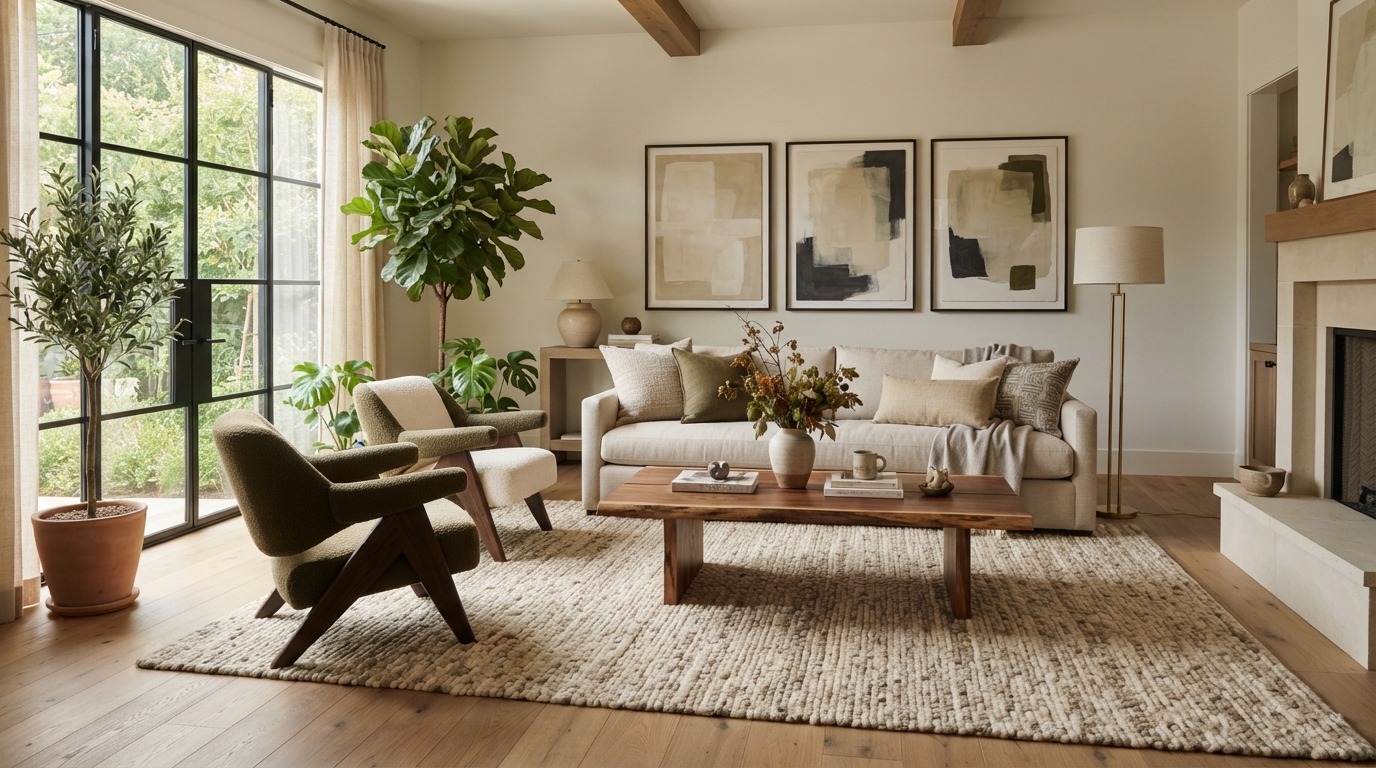
5. Choose Furniture That Balances Comfort and Proportion
Beautiful furniture will not make a room inviting if it is uncomfortable or incorrectly scaled. Before purchasing anything, measure the room, identify traffic paths, and consider how people will use the space. A living room designed for conversation requires a different layout from one arranged primarily for watching television.
Pay attention to proportion
Large rooms can handle substantial sofas, wide coffee tables, and tall bookcases, while compact rooms often benefit from furniture with visible legs, slimmer arms, and lighter visual weight. However, small spaces do not automatically require tiny furniture. One well-proportioned sofa can look better than several undersized chairs that create visual clutter.
Leave enough space for comfortable movement. A walkway should generally feel open rather than squeezed between furniture. Place coffee tables close enough to reach but far enough away to allow people to sit comfortably. In a dining area, allow room to pull out chairs without blocking a doorway or major walkway.
Create conversation-friendly arrangements
In a living room, avoid pushing every piece of furniture against the walls unless the room is extremely small. Floating a sofa or pair of chairs slightly away from the wall can create a more intimate arrangement. Position seating so that people can see one another without twisting their bodies.
For a flexible space, use movable pieces such as stools, ottomans, nesting tables, and lightweight accent chairs. An ottoman can serve as a footrest, extra seating, or a coffee table when paired with a tray. Round tables are especially useful in compact rooms because they improve circulation and soften rooms dominated by straight lines.
6. Bring Nature Indoors with Plants and Organic Elements
Plants instantly make a room feel more alive. Their color, shape, and natural irregularity soften architectural lines and add a sense of freshness. They also help fill awkward corners and empty shelves without making the room feel overly decorated.
Select plants according to the room
Choose varieties based on available light and your willingness to maintain them. Snake plants, pothos, ZZ plants, and cast-iron plants are generally forgiving choices for beginners. Fiddle-leaf figs and rubber plants can create a dramatic statement in bright rooms, while herbs or small potted plants work beautifully in kitchens and sunny windows.
Use a mixture of heights rather than placing all plants on the floor. A tall plant can fill an empty corner, a medium plant can sit on a stool or side table, and small plants can enliven a shelf or windowsill. Grouping plants in threes or varying odd numbers often creates a natural, balanced arrangement.
Add organic materials beyond greenery
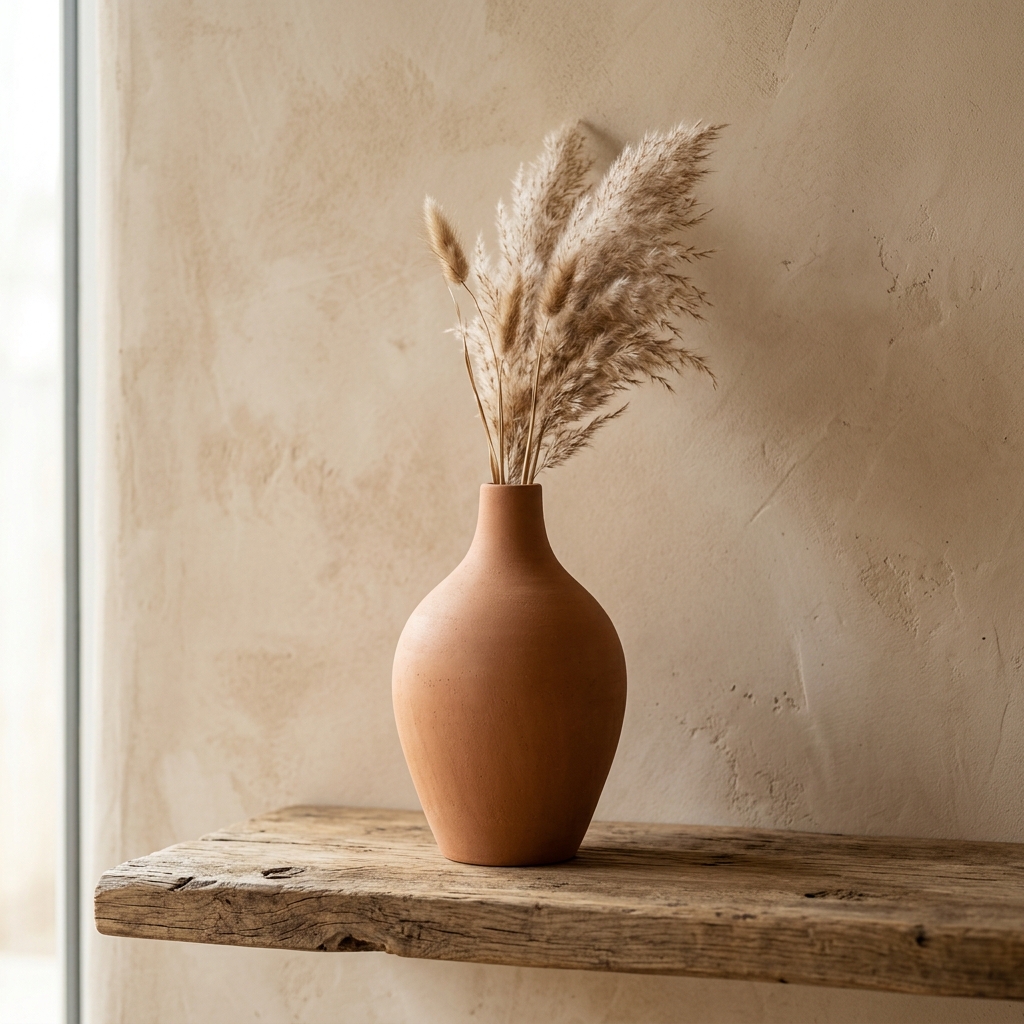
Natural wood, woven baskets, stone, terracotta, rattan, linen, and dried branches all introduce an organic quality. A bowl made from olive wood, a cane-front cabinet, or a stone vessel can add visual warmth even when live plants are not practical.
Keep plant containers connected to the room’s palette. Terracotta pots complement earthy interiors, white ceramic works well in clean modern spaces, and woven planters suit relaxed or coastal rooms. Use saucers or waterproof liners to protect furniture and flooring from moisture.
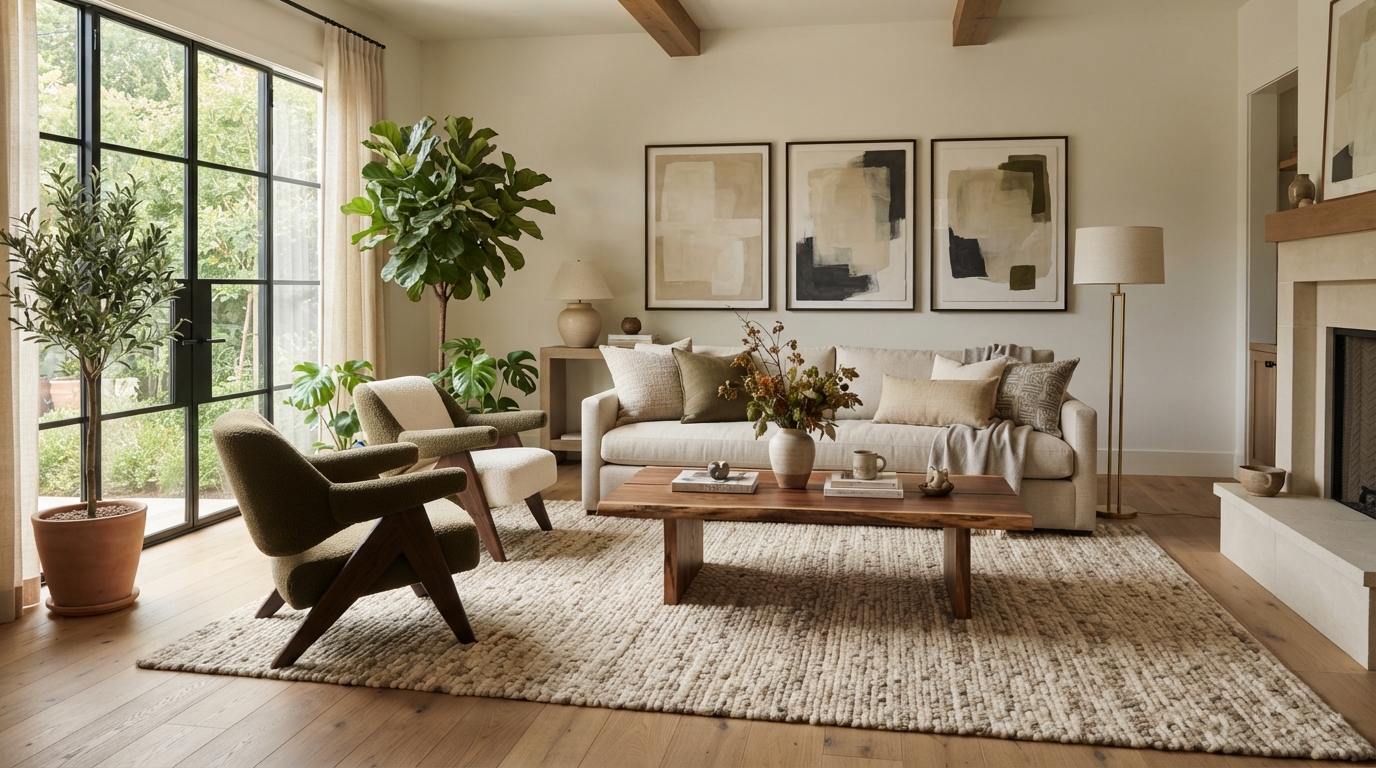
7. Style Shelves, Tables, and Surfaces with Intentional Layers
Decorative accessories give a room its personality, but too many objects can quickly turn styling into clutter. The goal is not to fill every surface. Instead, create small compositions that combine height, shape, color, and meaning.
Use the rule of varied heights
When styling a console, coffee table, dresser, or shelf, combine tall, medium, and low objects. A tall vase or lamp can anchor one side, a stack of books can provide a middle layer, and a shallow bowl or small sculpture can complete the arrangement.
Shop the Look
- Begin with one larger anchor piece, such as a lamp, artwork, vase, or substantial bowl.
- Add two or three objects that vary in height and material.
- Include something organic, such as a plant, flowers, branches, or woven material.
- Leave some empty space so the arrangement can breathe.
- Step back frequently to assess the composition from across the room.
Make coffee tables practical
A coffee table should be styled beautifully without becoming difficult to use. Place a tray on the table to organize smaller objects and make the entire arrangement easy to move when needed. Add a stack of attractive books, a candle, a small bowl, and one natural element such as flowers or a leafy branch.
For households with children, avoid fragile objects with sharp edges. Substitute a sturdy wooden bowl, a soft textile-covered box, or a low ceramic vessel. Practical styling is still stylish when it reflects how the room is actually used.
Display meaningful objects
The most memorable rooms include items that tell a story. Display travel finds, inherited pieces, handmade ceramics, framed family photographs, or artwork created by local artists. Personal objects prevent a space from feeling like a showroom and make the decor feel authentic.
8. Dress Windows and Walls to Add Softness and Scale
Windows and walls are often overlooked, yet they occupy a large portion of a room. Thoughtfully treated windows can make ceilings appear taller, improve privacy, and bring softness to hard architectural lines. Well-decorated walls help establish scale and give the room a finished appearance.
Hang curtains higher and wider
When using curtains, mount the rod several inches above the window frame and extend it beyond both sides of the window when possible. This allows the fabric to frame the window instead of covering much of the glass. It also creates the impression of a larger window and taller ceiling.
Choose fabric according to the mood you want. Linen and cotton create a relaxed, airy look. Velvet adds richness and insulation. Sheer panels filter light while preserving brightness, and lined curtains provide greater privacy and light control.
Make sure curtains reach the floor. Slightly pooling fabric can feel romantic and relaxed, while a clean break at the floor looks tailored. Avoid curtains that stop several inches above the floor, as they can make the room appear unfinished.
Create balanced wall arrangements
Large, empty walls often need one substantial piece or a carefully planned gallery arrangement. A gallery wall should have a visual connection through frame color, subject matter, or palette, even if the individual pieces are different.
Lay the arrangement on the floor before hanging it. Keep spacing relatively consistent, but do not worry about absolute perfection. A mix of photographs, prints, small mirrors, and three-dimensional objects creates a collected effect. For a simpler approach, lean several oversized frames on a shelf or console instead of creating a formal gallery wall.
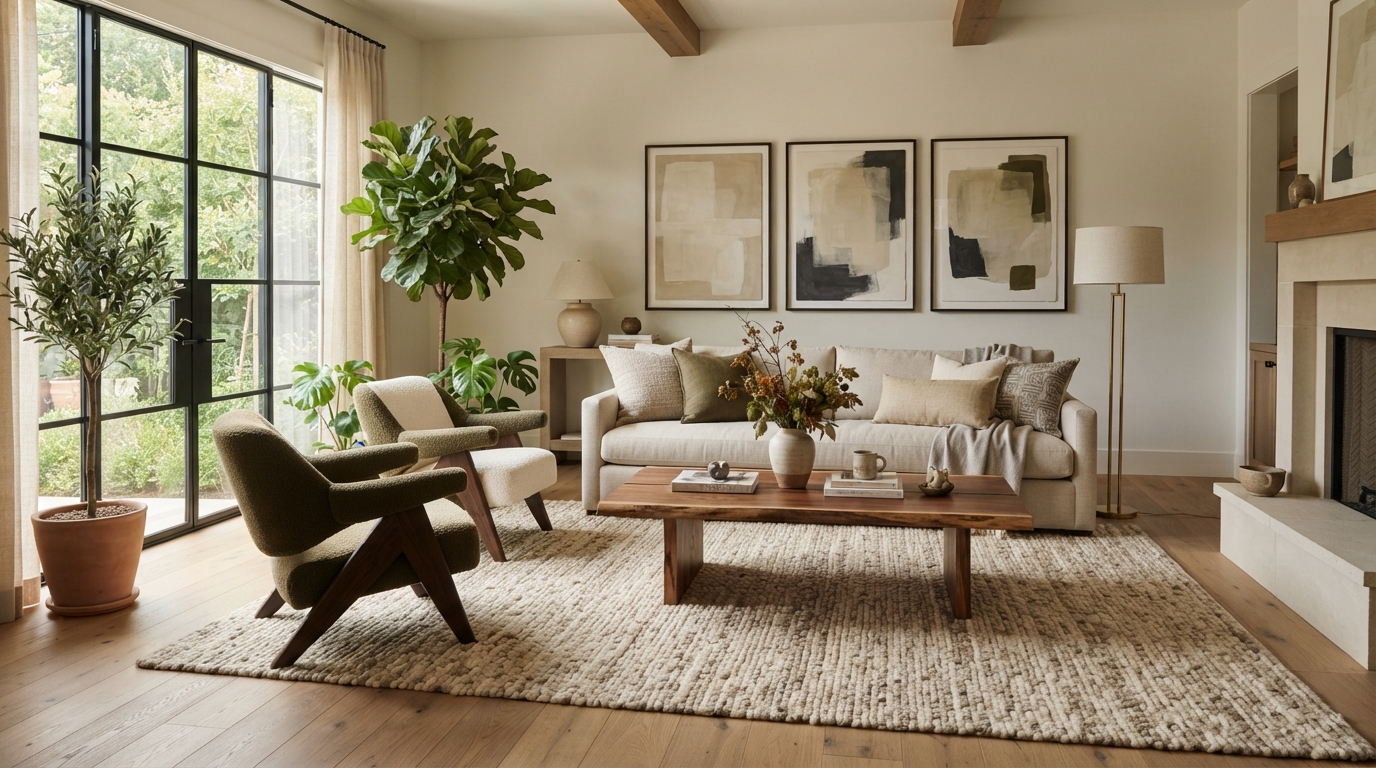
9. Add Personality Through Contrast and Curated Details
A stylish room should feel like it belongs to the people who live there. Personality comes from contrast, memories, craftsmanship, and small surprises. Without these elements, even a carefully coordinated room can seem generic.
Mix old and new
Pairing contemporary furniture with vintage or antique accents creates depth. A modern sofa may look especially inviting beside an antique side table. A sleek dining table can be softened with traditional chairs, a vintage rug, or an aged mirror. Mixing eras makes the room feel collected over time rather than purchased all at once.
If you are decorating on a budget, look for character-rich pieces at flea markets, estate sales, resale shops, and local artisan markets. Focus on construction, scale, and potential rather than surface perfection. A scratched wooden stool, old frame, or slightly worn basket may add more charm than a brand-new decorative item.
Use contrast carefully
Contrast gives a room energy. Consider combining light walls with dark wood, soft upholstery with black metal, rounded furniture with angular artwork, or pale textiles with a richly colored accent chair. Contrast should be repeated enough to feel deliberate but not so frequently that the room becomes visually busy.
For example, if you introduce black through a lighting fixture, repeat it in a picture frame and a small accent object. If you use a saturated color on one chair, echo that color in a cushion, artwork detail, or ceramic piece elsewhere in the room.
Make room for the unexpected
One unusual element can make a space memorable. It might be a brightly painted interior door, an oversized sculptural vase, a patterned ceiling, a whimsical lamp, or a colorful cushion that does not perfectly match anything else. These unexpected details create character and keep the room from feeling overly formulaic.
How to Apply These Ideas in Different Rooms
Living room
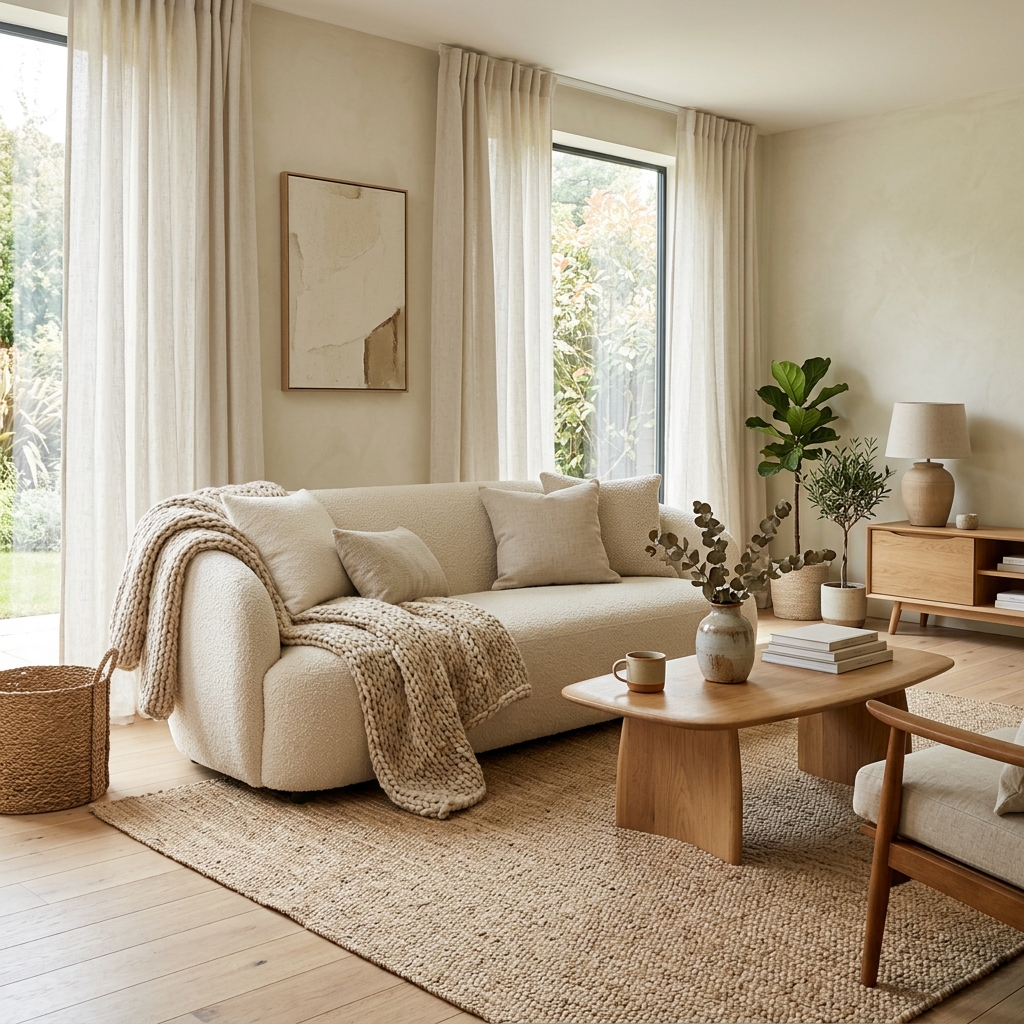
Begin with a comfortable seating arrangement and an appropriately sized rug. Add a coffee table that can handle daily use, then layer lighting through a ceiling fixture, floor lamp, and table lamp. Use artwork or a fireplace as the focal point, and finish with cushions, throws, books, plants, and a few personal objects.
For a small living room, choose a sofa with exposed legs, use a round coffee table, and consider a large mirror to reflect light. Keep the palette restrained and let one statement element, such as a colorful chair or patterned rug, provide visual interest.
Bedroom
Prioritize comfort and softness. Begin with bedding in a calm base color, then add two or three layers of texture through quilts, throws, and cushions. Use bedside lighting on both sides of the bed when possible, and select nightstands that provide practical storage.
Hang curtains high and wide to make the room feel more generous. Add a bench at the foot of the bed if space allows, and use artwork or a textured headboard to create a focal point. Keep decorative items limited to pieces that contribute to a restful mood.
Dining room
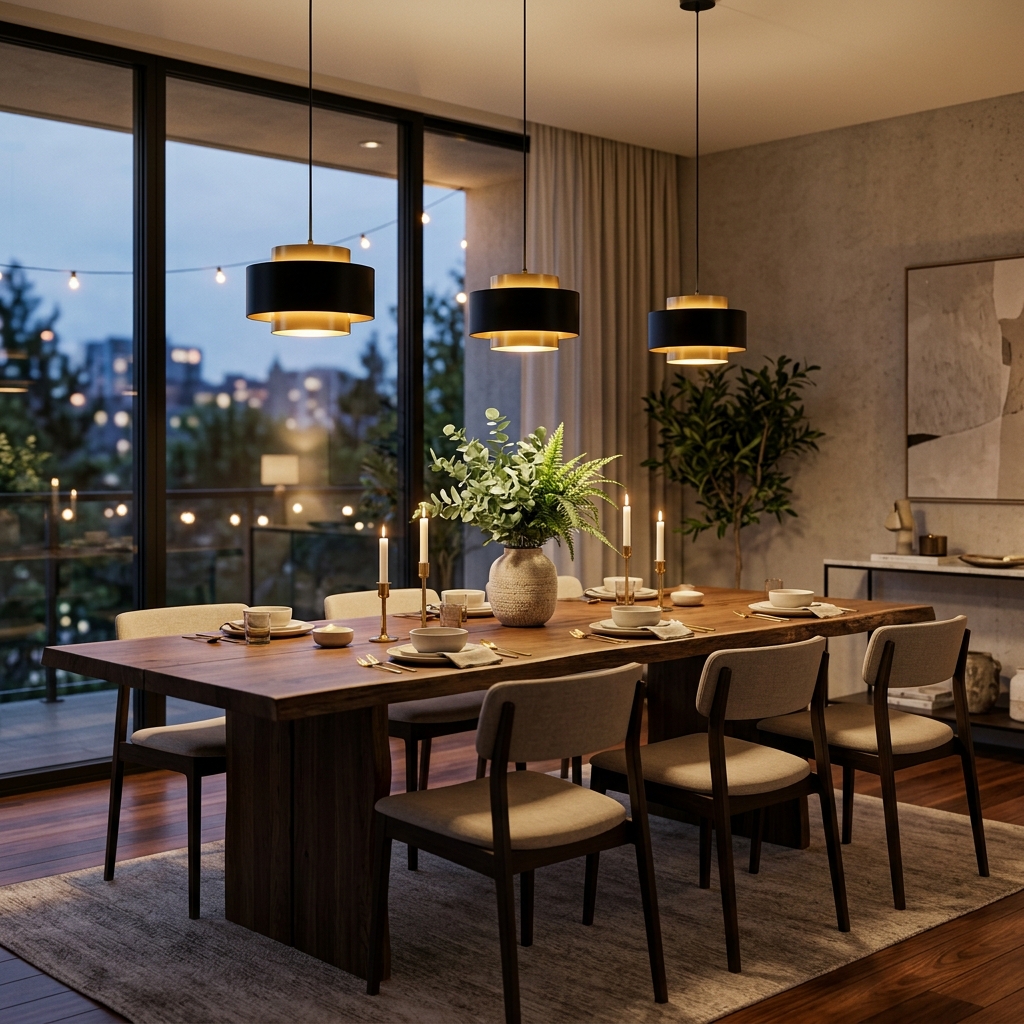
Center the room around a table that allows comfortable conversation and movement. A chandelier or pendant should be scaled to the table and hung at a height that provides light without obstructing views across the room. Add a rug large enough for chairs to remain on it when pulled out.
For everyday styling, use a bowl of fruit, a low floral arrangement, or a group of candles as a centerpiece. Low arrangements are usually more practical than tall ones because they do not block sightlines.
Entryway
An inviting entryway should be beautiful and functional. Add a narrow console, wall hooks, a mirror, and a basket for shoes, scarves, or bags. A runner can define the area and introduce color, while a small lamp creates a warm welcome in the evening.
If the entryway is very compact, mount a shelf instead of using a console. Place a mirror above it, add a small dish for keys, and keep the styling minimal enough to preserve clear circulation.
Home office
Choose a desk that provides enough working surface without overwhelming the room. Position it near natural light when possible, but avoid placing a monitor directly in front of a bright window. Add task lighting, closed storage for supplies, and one or two personal pieces that make the office feel inspiring.
Plants, artwork, and a comfortable chair can soften the functional nature of an office. Use cord management solutions so technology does not dominate the visual appearance of the room.
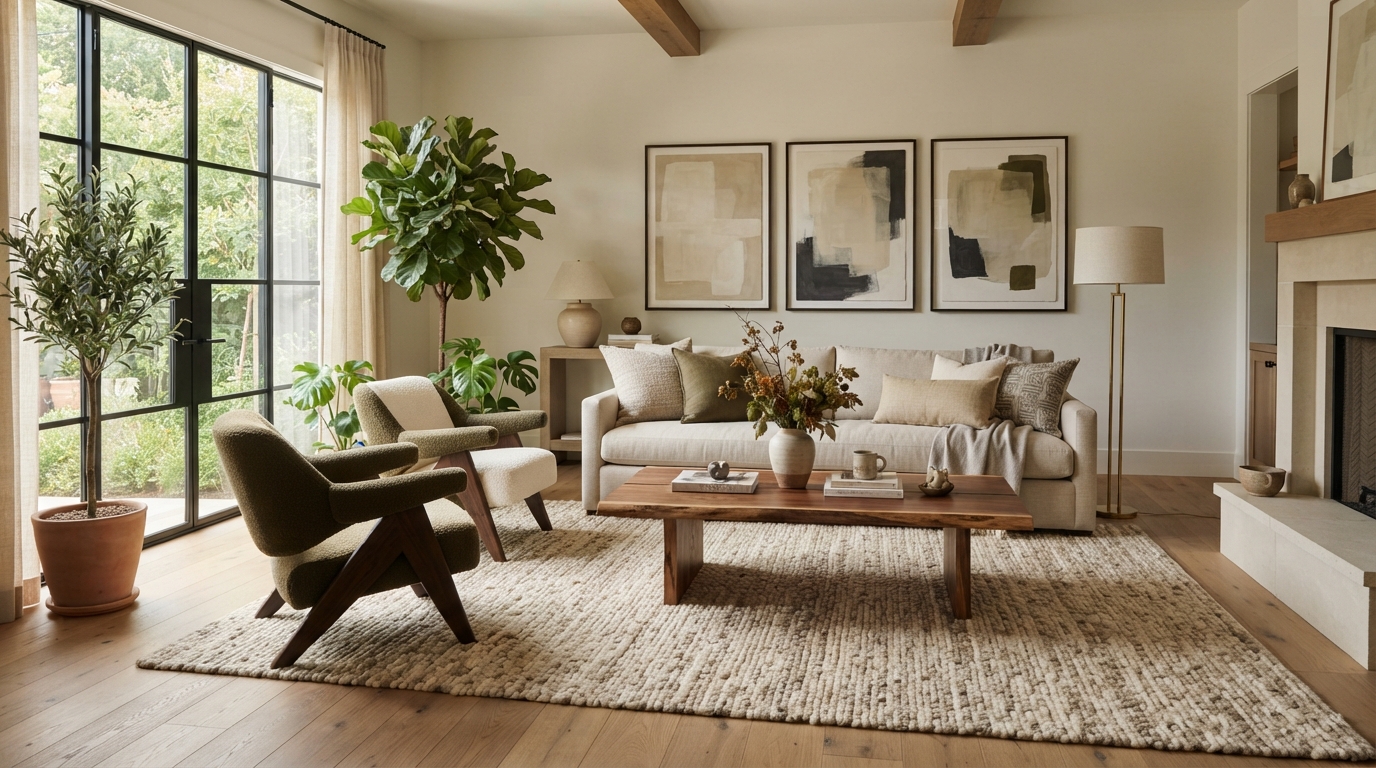
Practical Styling Principles for a More Inviting Home
Once the major pieces are in place, a few practical principles can help the room look polished without becoming precious.
Decorate for real life
Choose washable slipcovers, durable performance fabrics, easy-care rugs, and closed storage if your household is busy. A home should support everyday routines, not require constant protection from them. Use decorative trays to organize small items, baskets to collect clutter, and furniture with hidden storage whenever possible.
Keep visual breathing room
Empty space is part of good design. Do not fill every wall, corner, or shelf simply because it is available. A few well-placed objects will have greater impact when they are surrounded by space. If a room feels crowded, remove several small accessories before buying anything new.
Repeat shapes as well as colors
Color repetition creates harmony, but shape repetition creates rhythm. If your room includes a round mirror, repeat curved forms through a rounded vase, circular tray, or softly shaped chair. If the room is dominated by straight lines, introduce one or two rounded elements to make it feel more relaxed.
Consider the view from every angle
Walk through the room from the doorway, sit in the main seating area, and look toward the space from adjacent rooms. A successful arrangement should feel balanced from multiple viewpoints. Hide unattractive cords, avoid blocking windows, and make sure tall furniture does not interrupt important sightlines.
Refresh details seasonally
You do not need to redecorate an entire room to make it feel new. Rotate lightweight throws, cushion covers, flowers, artwork, and table accessories according to the season. In spring and summer, use lighter fabrics, fresh greenery, and pale colors. In autumn and winter, introduce deeper tones, candles, wool, velvet, and warmer lighting.
A Simple Room Refresh Plan
If you are unsure where to begin, follow this order. First, remove anything broken, unused, or visually distracting. Next, measure the room and assess whether the existing furniture is properly scaled. Choose a color palette, then establish a focal point and arrange the main furniture around it.
After that, add a rug to anchor the arrangement and layer the lighting. Introduce curtains, plants, and artwork before finishing with smaller accessories. This sequence prevents you from spending money on decorative details before solving the room’s larger design issues.
- Day one: declutter, measure, and identify the room’s primary function.
- Day two: refine the furniture arrangement and choose a color direction.
- Day three: add or adjust rugs, window treatments, and lighting.
- Day four: bring in plants, artwork, and textured textiles.
- Day five: style surfaces, edit accessories, and make practical adjustments.
Final Thoughts
The most stylish and inviting rooms are built through layers of thoughtful decisions. A cohesive palette creates harmony, a focal point gives the eye direction, and layered lighting establishes warmth. Texture adds richness, correctly scaled furniture improves comfort, and plants bring natural life into the space. Personal objects, contrasting materials, and carefully edited accessories ensure the final result feels distinctive rather than generic.
Start with the changes that will have the greatest impact: rearrange the furniture, improve the lighting, introduce a well-sized rug, or choose a more cohesive color palette. Then build gradually with artwork, textiles, greenery, and meaningful decorative pieces. When every element supports both the way you live and the atmosphere you want to create, any room can become more polished, comfortable, and genuinely welcoming.